
Row Smarter, Not Harder: Why Slowing Down Makes You Faster
If you’ve ever felt like you’re sprinting on the rower but not actually going anywhere… welcome to the club! Rowing looks simple from the outside, but the moment you sit down, strap in, and grab the handle, it becomes clear: this machine will absolutely expose your habits.
The good news? When you understand how rowing actually works, you don’t need to work harder to get faster. You just need to work smarter—and often that means slowing down.
Let’s break down why rowing is such a powerful conditioning tool, the real meaning behind “slow to go fast,” and the most common form issues we see at Studio ME (so you can stop fighting the rower and start using it to your advantage).
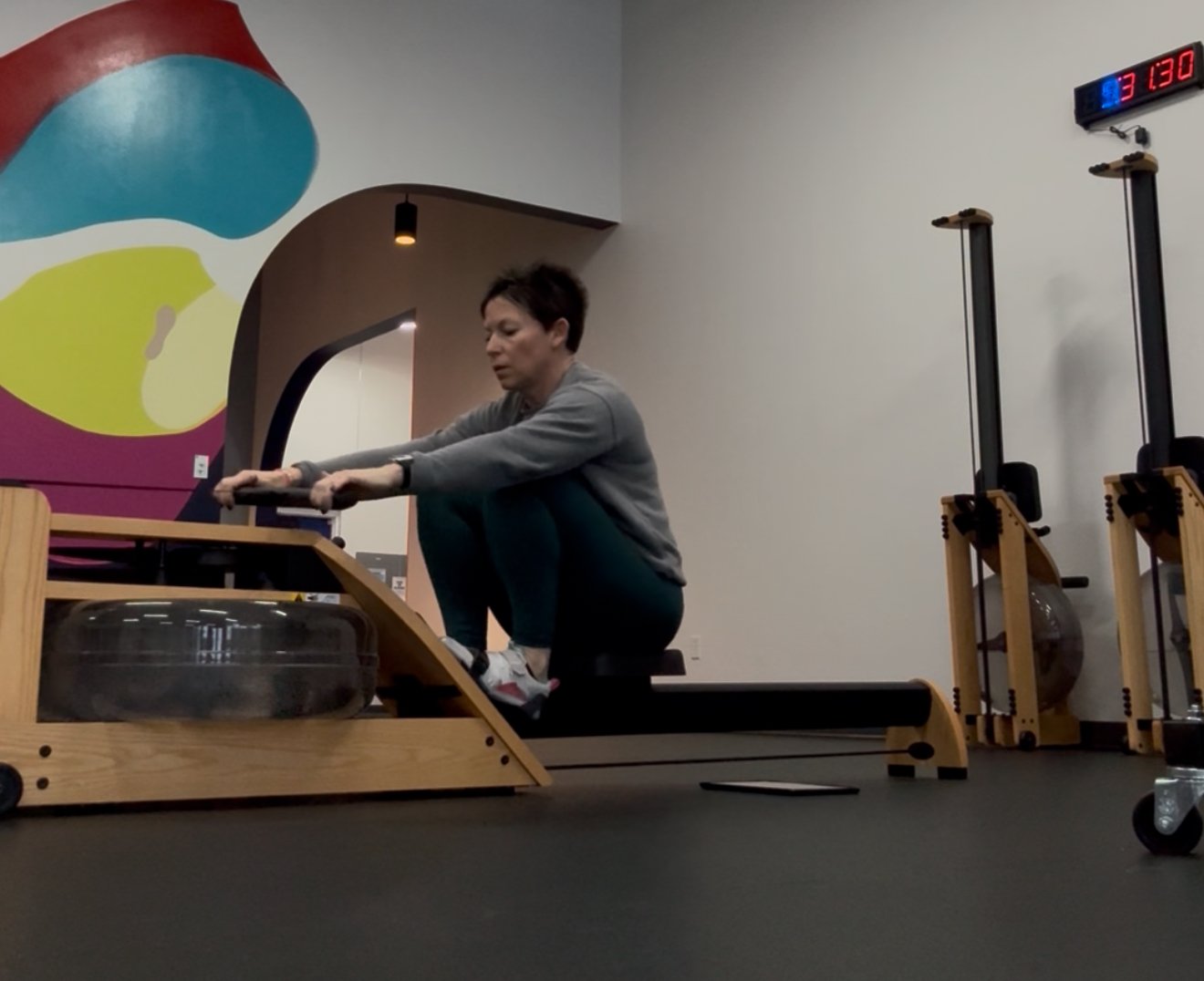
The start of your stroke. Notice the long spine, the vertical shins?
Why Slower Makes You Faster
Here’s the secret most people miss: the rower rewards efficiency, not chaos.
You can flail your way to a high stroke rate, but without power, you’re just creating chaos.
When you slow down—just a little—you give yourself room to:
- Drive with more power instead of rushing through the stroke
- Lengthen each stroke, which covers more meters with less effort
- Breathe and recover during the return instead of sprinting back into bad positions
- Maintain technique longer, especially in tough workouts
Think of it like lifting weights: swinging a kettlebell as fast as possible doesn’t make it a better rep. Neither does ripping on the rower with zero control.
Control = power. Power = speed. Speed = better split time without burning out.
Why Rowing Beats Most Other Cardio
Rowing is one of the most underrated conditioning tools out there; that’s why we row at Studio ME! A quick highlight reel:
1. Full-body power in every stroke
Roughly 85% of your muscles are involved. Legs, core, back, arms—they all show up. Nothing isolates your “engine” and your total-body strength quite like the erg.
2. Low impact but high return
Rowing challenges your cardiovascular system without pounding your joints. Great for active aging, injury prevention, and longevity—which is why it’s a staple at Studio ME.
3. Builds strength and endurance
It’s not just cardio. Every stroke is a controlled push through the legs, hinge through the hips, and pull through the back.
4. It exposes your weaknesses—in a good way
You learn quickly where you’re leaking energy, losing posture, or letting fatigue take over. And once you fix those inefficiencies, every workout becomes more effective.
This is why our coaches love incorporating rowing into your workouts. It’s a tool that meets you where you’re at and grows with you.
Why We Row at Studio ME
Rowing fits perfectly into our mission: helping busy people build strength, stay pain-free, and keep moving for life.
At Studio ME, we use rowing because:
- It scales to all fitness levels
- It pairs seamlessly with strength work
- It helps clients understand power production and pacing
- It builds confidence—fast
- It’s a safe way to train intensity without overloading your joints
Plus, when you learn to row efficiently, your workouts instantly feel smoother, stronger, and far more rewarding.
Common Form Issues (and How to Start Fixing Them Today)
Almost everyone comes to the rower with at least one of these habits. If you see yourself in these… great. Awareness is the first step.
1. Leaning back too far
That dramatic lay-back at the end of the stroke? Looks cool. Wrecks your power. A slight lean is plenty (think 10am and 2pm on a clock)—you’re not trying to launch off the machine.
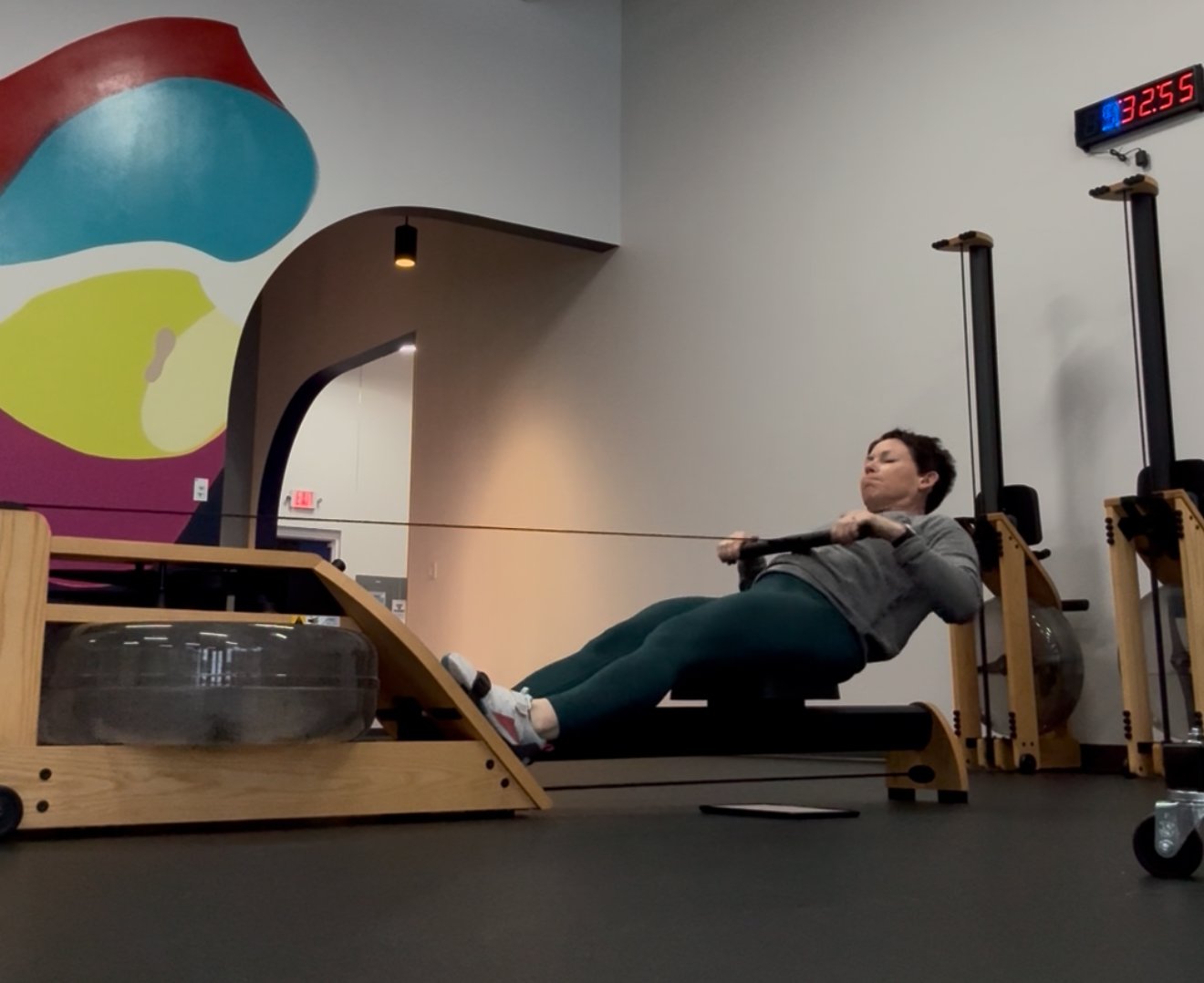
I am leaning back way too far in this stroke. Think 10-2pm of a clock.
2. Slouching in the catch or finish
If your spine rounds, your power disappears and your lower back does the work. Tall torso = stronger stroke. Feel your sit bones on the seat at ALL times. You basically lean forward of them and back off them while staying tall.
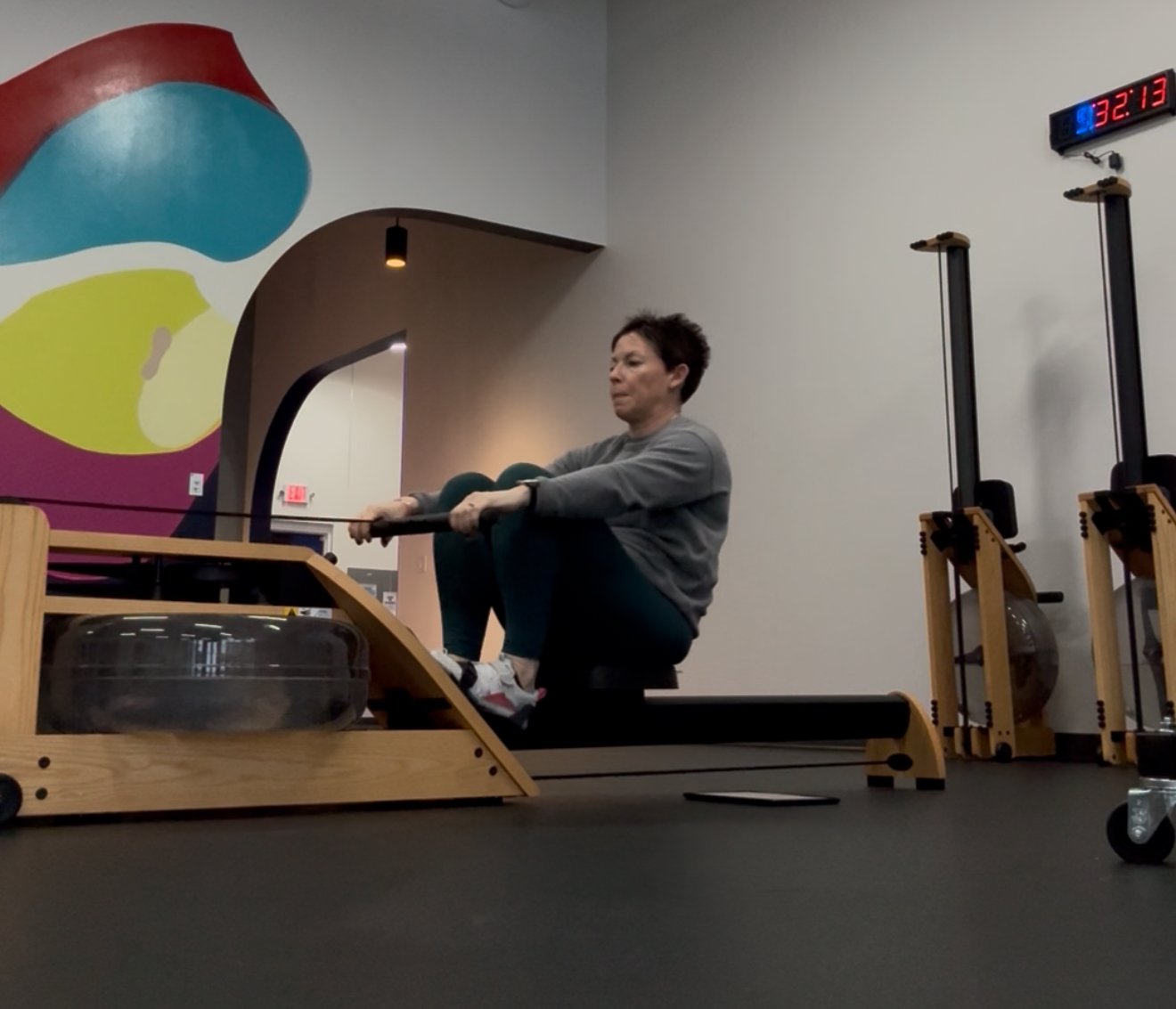
Notice the “C” shape in my spine? I am losing power.
3. Pulling with the arms too early
The most common mistake. The legs are the engine. The arms are just the finishing piece. Legs are 60% of the stroke, arms 20%, core 20%. When you don’t let your legs do the work, your arms fatigue and you become less and less efficient.
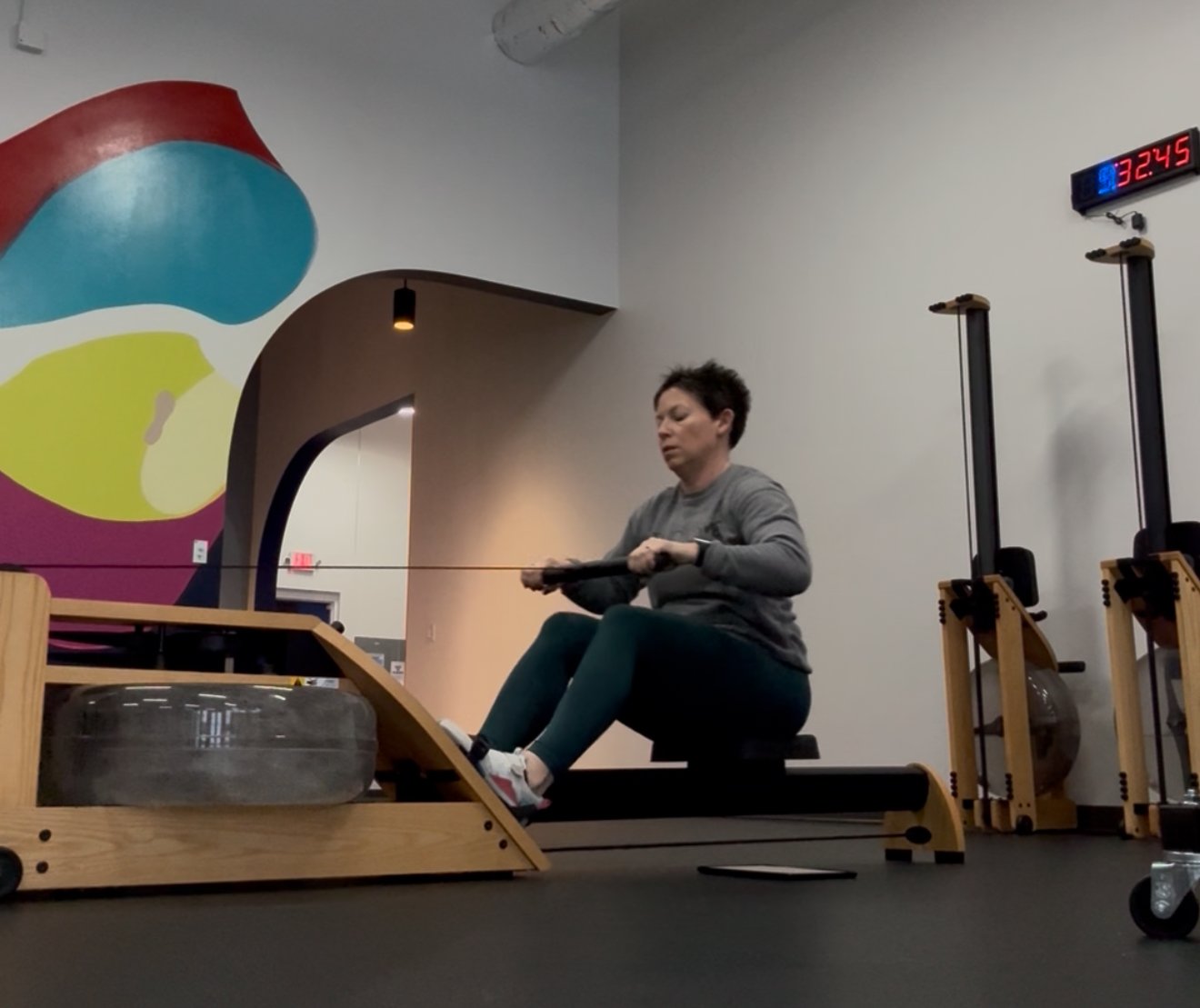
I am using my arms WAY too soon in this stoke and missing out on the power of my legs.
4. Knees coming up too soon on the return
This throws off timing and makes the rower feel choppy. Arms → Core → Legs. Always! Too many times we see the legs be the first thing to move on way in/recovery part of the stroke.
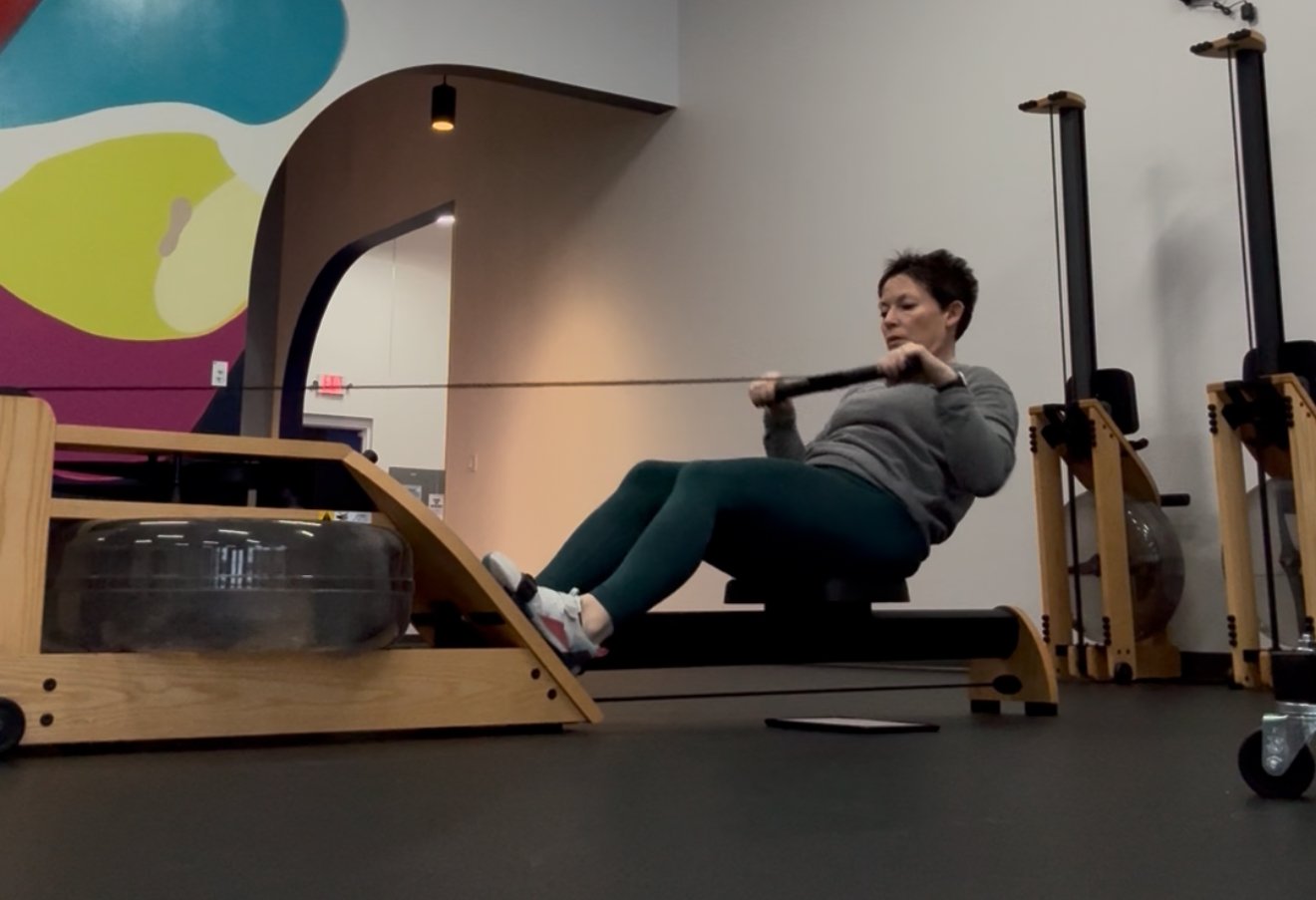
On the way in/recovery part of the stroke, I am bending my knees way too early.
5. Rushing the recovery
This is where “slow to go fast” lives. Speed belongs on the drive—not the return. Think Power, patience, patience or a 1 fast and powerfull on the way out and count 2, 3 on the way in. If your strokes per minute is ALWAYS above 28spm we need to work on this!
This one requires a video…LOL. We’ll definitely cover in the workshop.
6. Leaning back too far on the drive
If you lean back on the drive/push of the stroke, you loose all power from the legs. You must stay in a hinged position on the drive. Legs > Core > Arms.
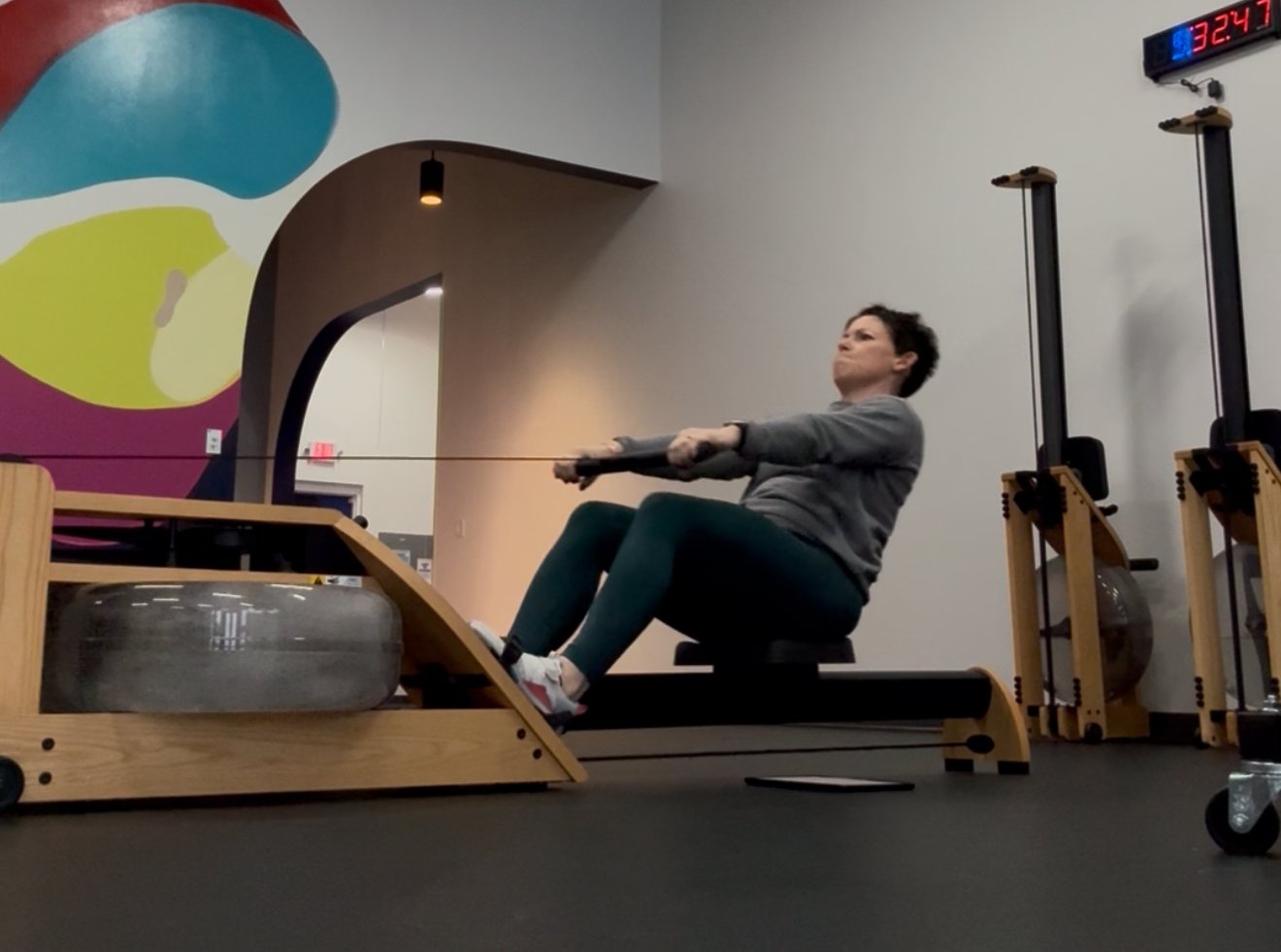
With this positioning, I have just lost all power from my legs and dumped it all in my back. If your back hurts while rowing…this could be why.
7. Slamming the knees down on the way back
This usually happens when the stroke is out of sequence or you’re trying to hard with the push. We want smooth movements which creates smoother power. This is another one that requires a video but basically you push back and slam the knees down vs thinking about “squeezing the quads.”
Recap
These are just some of the common things we see on the rower and not an inclusive list but, believe me, I have personally seen everything over the last 11 years teaching rowing.
If you’ve been fighting any of these habits, you’re not alone—and the fixes are easier than you think when someone shows you step-by-step.
Want to Row Better in Just One Session?
Join our owner Megan on January 31 for a hands-on rowing workshop where you’ll learn exactly how to:
- Row with less effort and more speed
- Fix energy leaks in your stroke
- Understand pacing so you don’t burn out
- Get more power out of every meter
You’ll walk in frustrated and walk out feeling stronger, smoother, and way more confident on the erg.
Ready to row smarter—not harder? Join Megan on Jan 31 and transform your row.