
It’s Not Just About Working Out: Why Nutrition Matters After 40 (And Where to Start)
If you're over 40 and feel like your body suddenly started playing by different rules, you're not alone.
Maybe you're: • Exercising consistently but not seeing results • Recovering slower • Feeling more fatigued • Struggling with stubborn weight gain • Losing strength despite training
This isn't a motivation problem. It's often a physiology shift. After 40, your body becomes more sensitive to three things:
- Muscle loss
- Hormonal shifts
- Nutrition quality
Most people only focus on workouts. But the real formula becomes:
**Strength training + daily movement + nutrition + hormone support habits **and nutrition is often the missing piece.
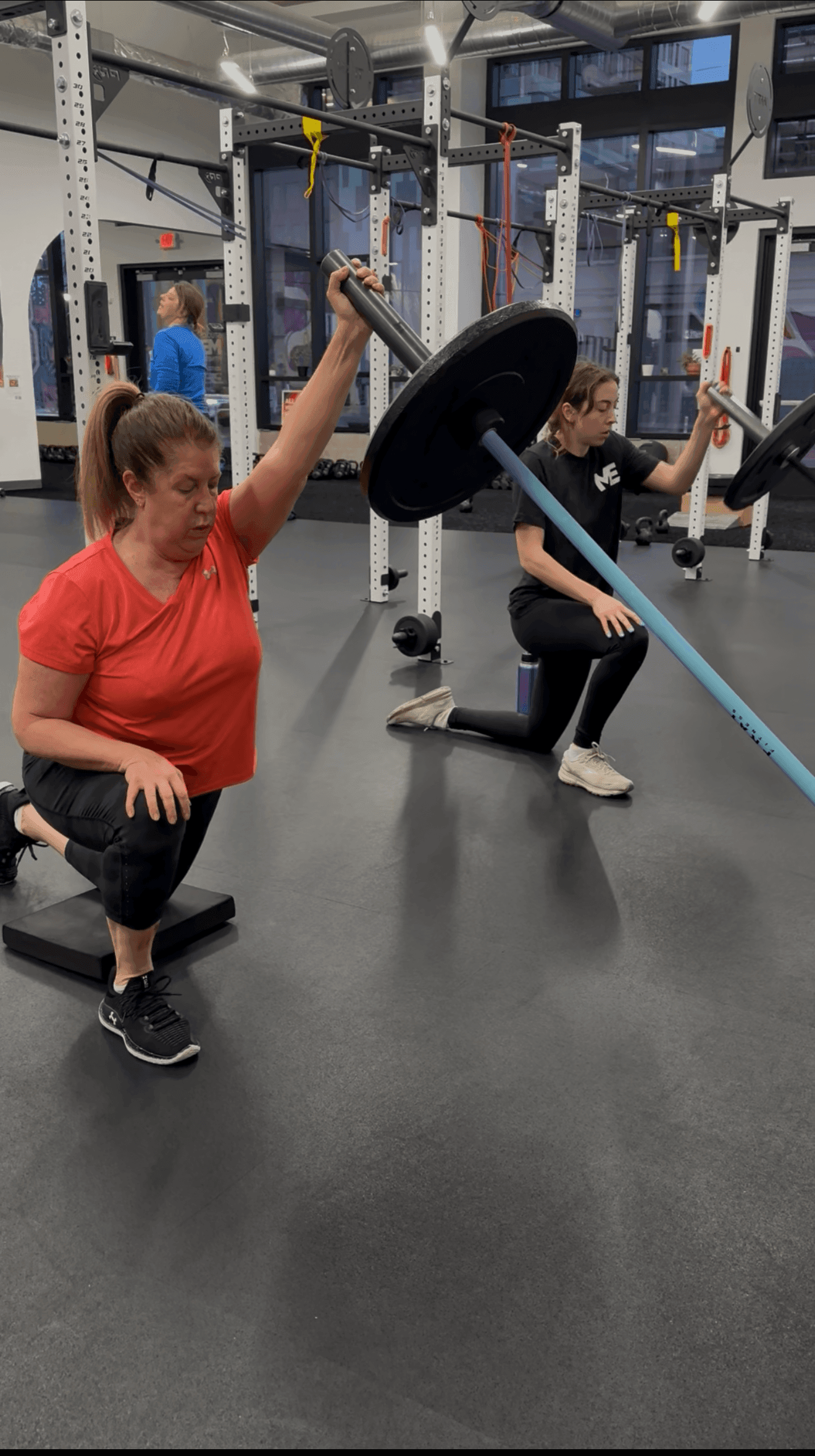
Strength training helps maintain muscle and metabolic health after 40.
What Happens To Hormones After 40 (And Why Nutrition Matters More)
Starting in our late 30s and early 40s, several hormones that regulate metabolism and recovery begin to change:
- Testosterone (men and women) Supports muscle maintenance and strength
- Estrogen (women) Impacts recovery, joint health, and fat distribution
- Growth hormone Impacts recovery and tissue repair
- Insulin sensitivity Affects how well we use carbohydrates
- Cortisol Our stress hormone, which affects recovery and fat storage
These changes don't mean decline is inevitable. They mean your inputs matter more. Nutrition becomes one of the strongest levers to support:
- Muscle retention
- Recovery
- Energy regulation
- Inflammation control
And this is why random dieting tends to fail adults over 40. Your body now responds best to consistency and adequate fueling. Not restriction. This is where things go wrong for many people.
Strength Training: The Most Powerful Hormone Support Tool
Strength training doesn't just build muscle. It helps regulate hormones tied to aging. Research shows resistance training helps:
- Improve insulin sensitivity
- Support testosterone levels
- Improve metabolic health
- Reduce age-related muscle loss
Source:American College of Sports Medicine https://www.acsm.org
The minimum recommendation is to strength train 2–3 times per week!
Focus on total body movements. This is exactly why our ME Method focuses on foundational movement patterns rather than random workouts. Check out our blog on our ME Method and why it works.
Movements that give the highest return:
- Squat
- Hinge
- Push
- Pull
- Carry
- Rotate
These movements stimulate the largest muscle groups and produce the greatest hormonal and metabolic benefit.
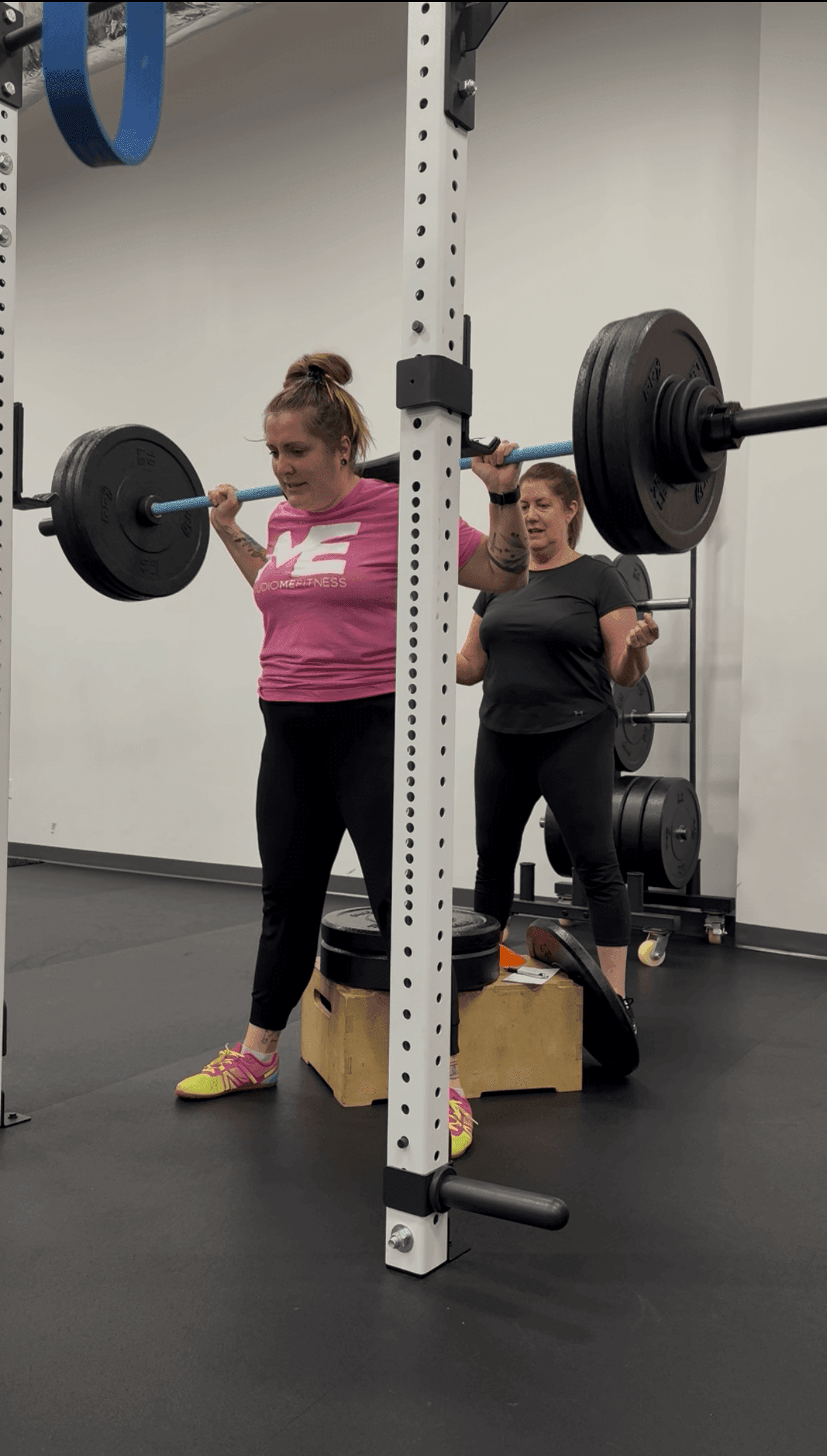
Strength training 2x/week with total body workouts.
Why Protein Intake Supports Healthy Aging Hormones
Protein becomes even more important after 40 because your body becomes less efficient at stimulating muscle protein synthesis. This means that you need slightly more protein to get the same effect you got in your 20s.
Protein supports:
- Muscle maintenance
- Metabolic health
- Recovery
- Bone density
- Appetite regulation
Research suggests older adults benefit from roughly: .8-1.2g protein per gram of bodyweight
*Source: National Institutes of Health *https://pmc.ncbi.nlm.nih.gov/articles/PMC4208946/
The biggest mistake we see with our clients:
- skipping breakfast
- protein only at dinner
The best approach is to distribute protein across the day. Here’s the simple framework we teach in our 12 Week Nutrition and Lifestyle Program.
- Breakfast → 30–40g
- Lunch → 30-40g
- Dinner → 30-40g
- Snacks → 10–20g
Read more on protein in our blog posts Why Eating Enough Protein Isn’t an Option Especially as you age and Women over 40: Why Eating Less Isn’t the Answer
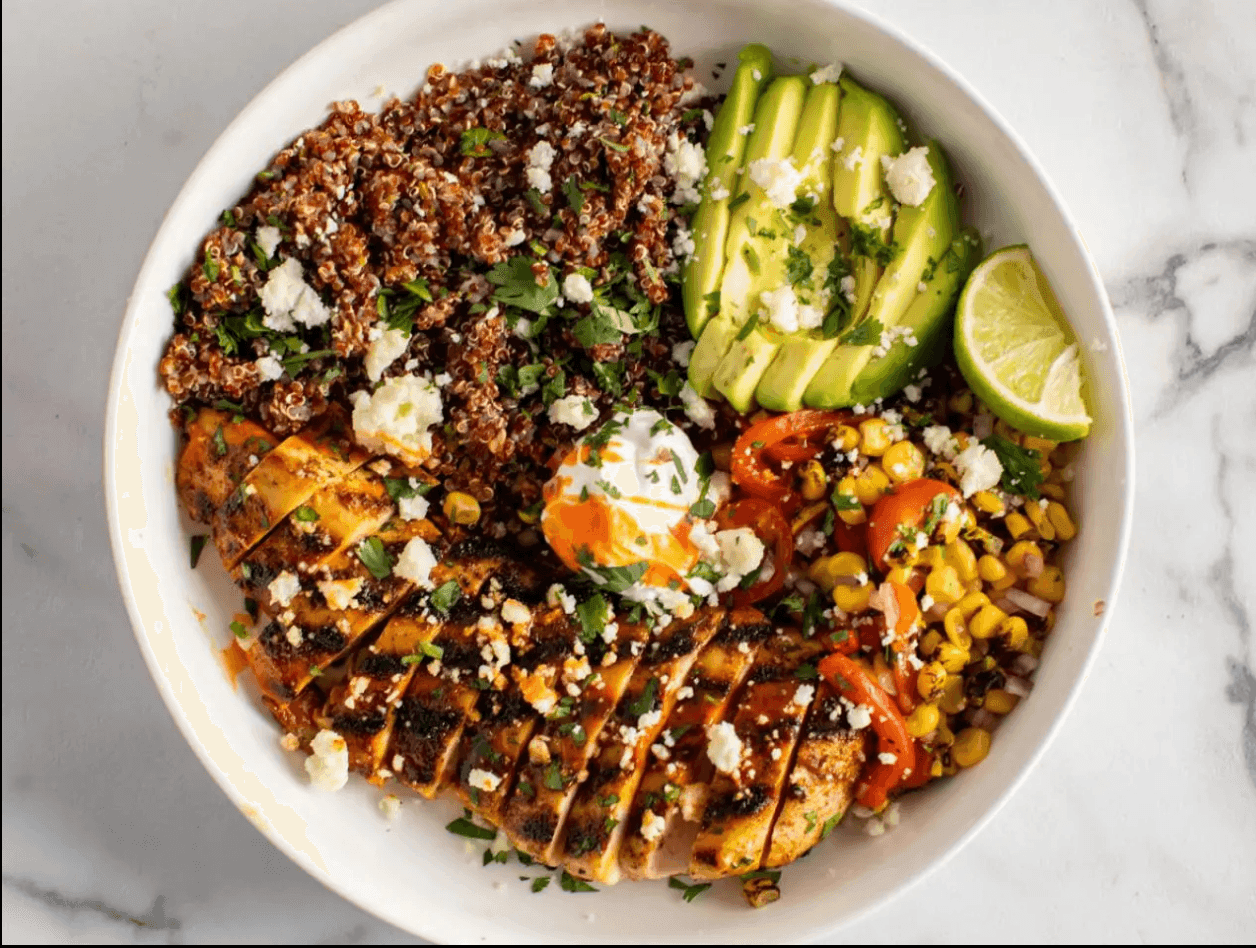
High protein meals help perserve muscle and keep our body functioning optimally as we age.
Carbs And Hormones: Why Eliminating Them Backfires
I see this with so many of clients…. eliminating carbs because we’ve been told they are “bad” for us. But long term, overly restricting carbs can negatively impact:
- Energy
- Recovery
- Thyroid function
- Workout performance
Carbohydrates support:
- Training performance
- Recovery
- Nervous system function
- Hormone regulation
The problem isn't carbs. It's lack of balance. Instead of removing carbs - improve the quality of the carbs you eat. Better carb choices include:
- Fruit
- Rice
- Potatoes
- Oats
- Beans
- Whole grains
A simple strategy: Build meals around protein first, then add carbs.
Where Adults Over 40 Should Start With Nutrition
Most adults don't need a diet. They need structure. In our 12 week Nutrition and Lifestyle Program we start with behaviors:
Start here:
- Eat protein at breakfast
- Eat 3 consistent meals
- Strength train twice weekly
- Walk daily
- Drink more water
Then layer in:
- Fiber intake
- Balanced macros
- Meal timing
This is the same behavioral-first model we use inside our ME Method because habits create sustainability.
The Real Goal After 40 Isn't Fitness. It's Longevity.
The real shift after 40 isn't aesthetic. It's functional.
People want to:
- Stay strong
- Avoid injury
- Maintain independence
- Keep doing activities they love
Exercise alone can't do that.
Nutrition alone can't do that.
Together they build durability. And durability is the real goal.
The Bottom Line
If you want to improve health after 40:
- Strength train at least twice weekly
- Eat enough protein
- Walk consistently
- Stop fearing carbs
- Build repeatable habits
You don't need more effort.
You need better alignment between exercise and nutrition.
Because the real goal isn't just getting fit.
It's staying capable.
Where To Start This Week
Start simple:
- Add protein to breakfast tomorrow
- Schedule two strength sessions
- Walk 10 minutes daily
- Eat meals consistently
Then build from there. Progress after 40 isn't about doing everything. It's about doing the right things repeatedly.
Want Help Building A Sustainable Plan?
If you're a busy adult trying to balance fitness, nutrition, and recovery without burning out, the most important thing isn't motivation. It's having a plan that fits real life.
At Studio ME, we focus on helping adults 40+ build strength, improve nutrition habits, and stay active long term through structured coaching and personalized programming.
If you're curious where you currently stand, a good starting point is simply understanding:
- Where your strength is
- Where your movement is
- Where your nutrition habits are
From there, progress becomes much clearer.