
You're Losing Muscle Right Now. Here's Why.
Let me ask you something.
When was the last time anyone told you that you start losing muscle in your 30s?
Not when you stop working out. Not when you get injured. Just by being alive, after the age of 30, your body begins losing muscle at a rate of 3 to 8 percent every decade. It has a name. It's called sarcopenia. And most people have never heard of it.
I talk about this with clients all the time. It's one of those things that once you know it, you can't unknow it.
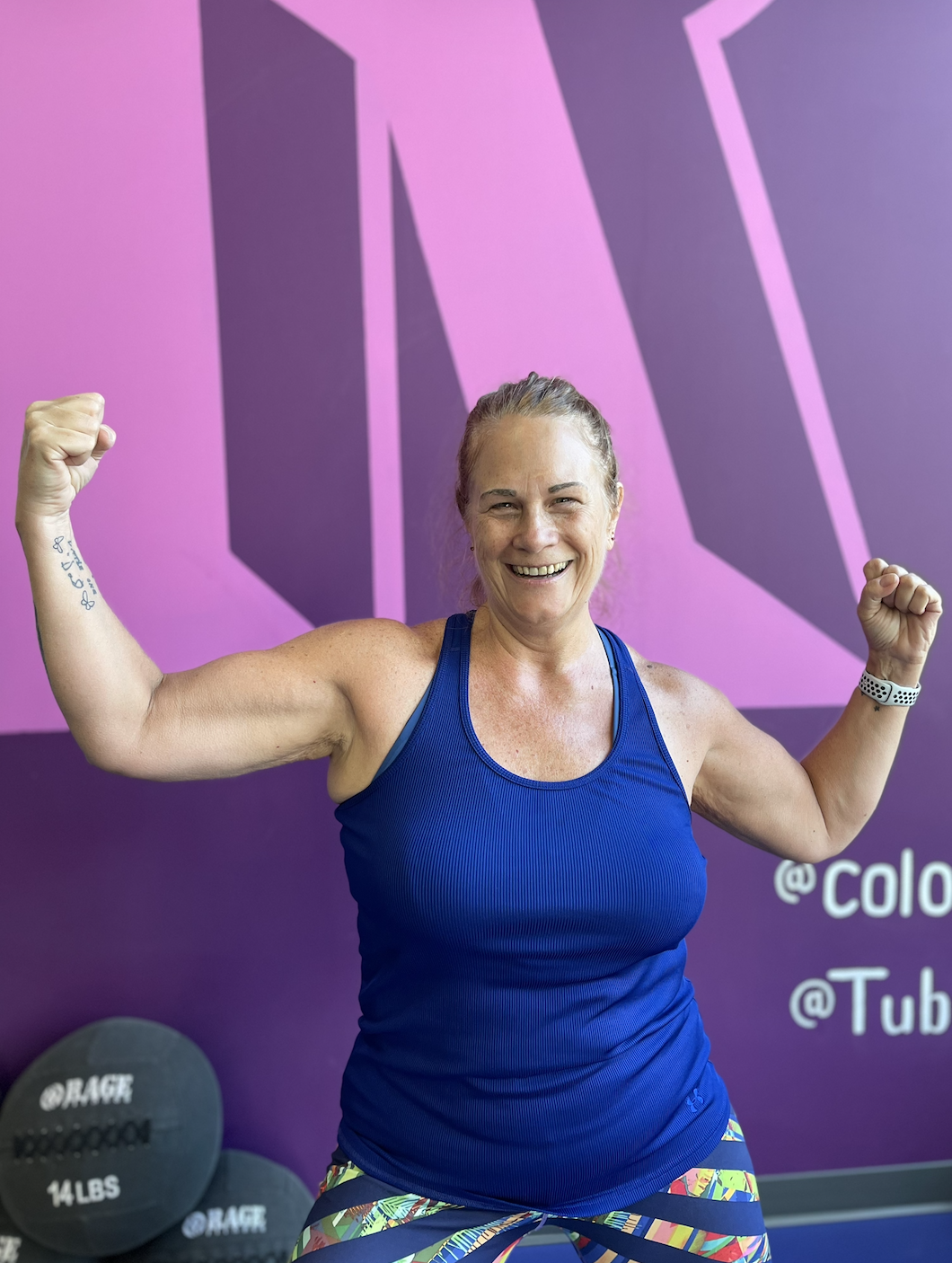 Woman over 40 strength training with dumbbells
So why does it matter?
Because muscle isn't just about how you look. Muscle is what keeps your metabolism running. It's what protects your joints. It's what keeps you strong enough to do the things you love, for as long as you want to do them. Dr. Gabrielle Lyon, a physician who has built her entire practice around this, puts it plainly: muscle is the organ of longevity. The more muscle health you have, the better your trajectory of aging.
That's not fitness talk. That's medicine.
Here's what muscle loss actually does to your body over time:
- Your metabolism slows down. Not because of age exactly, but because you're losing the tissue that burns calories at rest.
- Your joints start hurting. People assume joint pain is just part of getting older. A lot of the time it's a muscle problem, not a joint problem.
- Your blood sugar gets harder to regulate. Muscle is the primary tissue that absorbs glucose after you eat. Less muscle means less efficient blood sugar management.
- Everyday things start feeling harder. Carrying groceries. Getting up off the floor. Recovering from a stumble. All of it depends on muscular strength.
Here's the part I really want you to hear.
Sarcopenia is not inevitable. It's not something you just accept because you're getting older.
Dr. Lyon's research is clear on this: progressive resistance training builds muscle mass even in adults in their 60s and 70s. The body doesn't stop responding. It just needs the right stimulus.
And that stimulus is specific. It's not yoga. It's not walking. It's not a spin class. It's progressive resistance training, where you're adding load and challenging your muscles over time.
That's exactly why we built our semi-private training model.
If you're ready to stop guessing and start seeing what your body is actually capable of book a tour today.
*Sources: Dr. Gabrielle Lyon, Forever Strong (2023); Lyon G, Rountree R. "Muscle-Centric Medicine." Integrative Cancer Therapies (2024). More at drgabriellelyon.com. *