
On a GLP-1? Here's What No One Told You.
Let me tell you something your doctor probably didn't mention.
If you're on Ozempic, Wegovy, Mounjaro, or any GLP-1 medication, you're likely losing weight. That part is working. But research consistently shows that anywhere from 25 to 40 percent of the weight lost on these medications can come from lean muscle mass, not fat.
Not weight you don't need. Muscle. The metabolically protective, joint-supporting, calorie-burning tissue you actually want to keep.
Dr. Gabrielle Lyon has been one of the loudest clinical voices on this. She's a physician fellowship-trained in geriatrics and nutritional sciences, and her concern is direct: most physicians are not addressing this.
Patients are losing weight without any plan to protect what matters most.
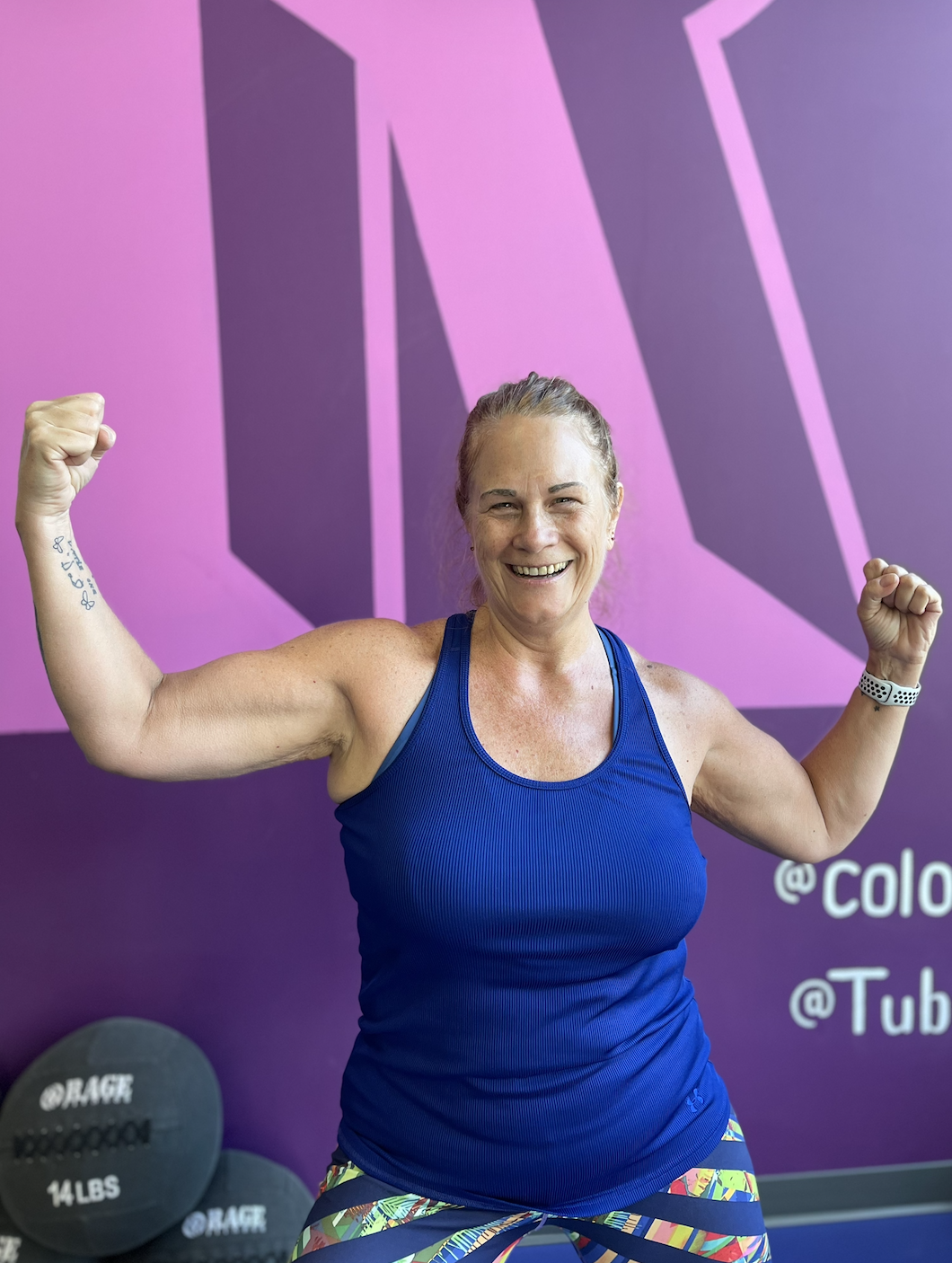 Women over 40 flexing biceps.
Why this is a bigger problem than it looks
Think about what muscle loss actually means long-term.
- Your resting metabolic rate drops. Muscle is what burns calories at rest. When you lose it, your baseline goes down. That's a primary reason why people who stop GLP-1 medications often see the weight come back. They return to normal eating with a lower metabolic floor than when they started.
- Your joints weaken. Muscle is your joint's support system. Rapid weight loss without muscle preservation often produces more joint pain, not less. That's the opposite of what you're going for.
- Your functional strength declines. The ability to carry things, balance, recover from a stumble, all of that depends on muscle. You can end up lighter and actually less capable.
The fix is well-documented Dr. Lyon's clinical protocol for GLP-1 users comes down to three things, used together.
- Progressive resistance training, two to three times per week. This is the signal that tells your body to preserve and build muscle even in a caloric deficit. Not cardio. Resistance training specifically.
- Adequate protein. GLP-1 medications suppress appetite, which makes it very easy to under-eat protein without realizing it. Dr. Lyon recommends significantly more than standard guidelines suggest, and it needs to be distributed across meals to actually trigger muscle protein synthesis.
- Creatine. One of the most studied supplements in sports science. In older adults and in people in a caloric deficit, creatine supports muscle preservation and improves training performance. Dr. Lyon considers it foundational for this population.
This is where semi-private training changes everything.
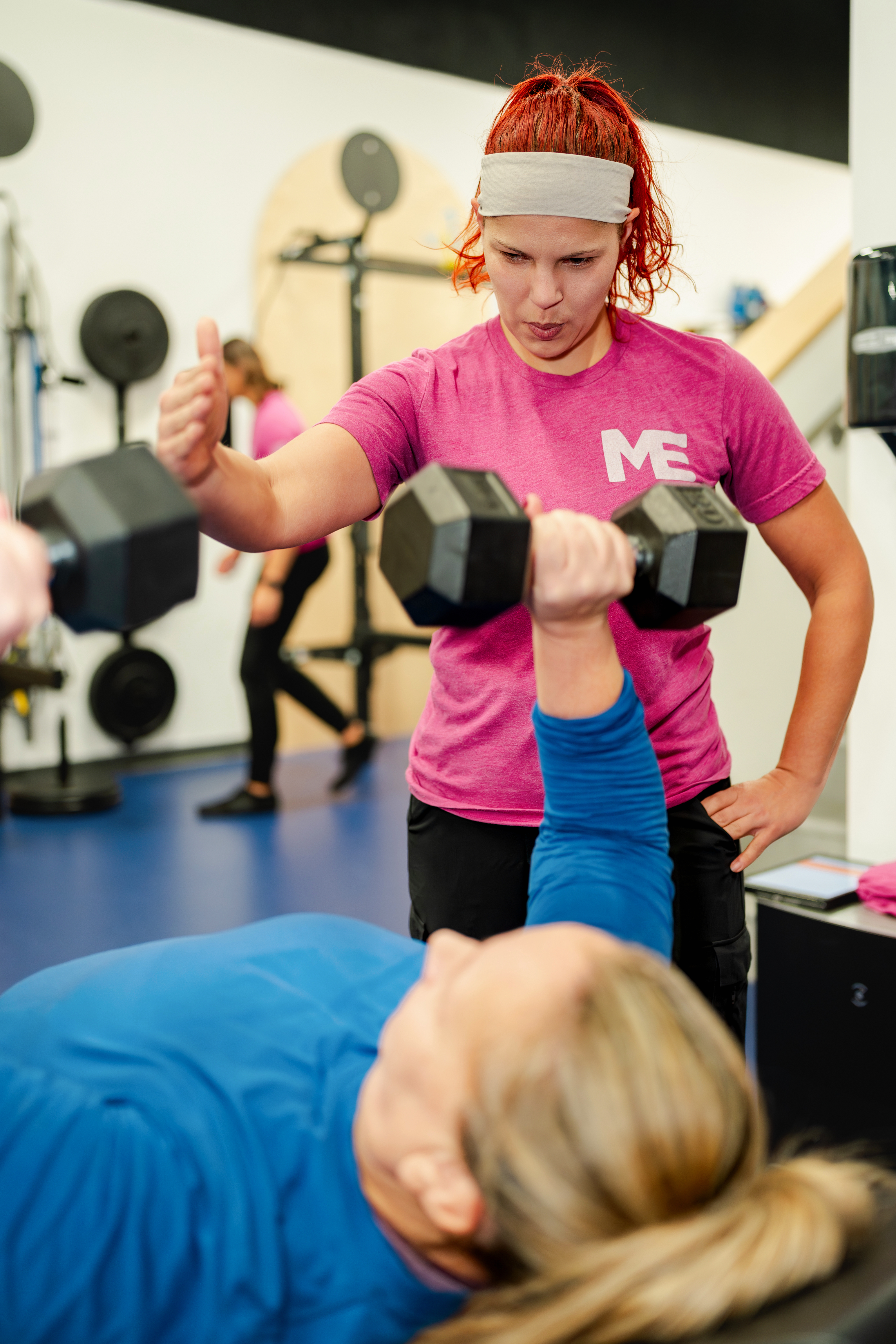 Women over 40 performing a dumbbell incline press with coach spoting her.
Most people know they should be doing resistance training alongside their medication. Very few are actually doing it consistently, with someone who understands what their body needs right now.
That's the gap semi-private training fills.
When you train in a small group of six people maximum, your coach knows your situation. They program around it. They track your numbers. They adjust when something isn't working. That consistency and accountability is what makes the protocol Dr. Lyon describes actually stick in real life, not just in theory.
At Studio ME, we also use the Fit3D body composition scan to track exactly what's changing in your body month by month. Not just weight. Muscle mass, body fat, visceral fat, metabolic rate. Most people on these medications have no idea whether they're losing fat or muscle. With us, you will.
The medication can do its job. We make sure you keep the results.
Come see how we work. Book a tour and we'll walk you through exactly what training looks like for someone in your situation.